Malawi Local Government Association (Malga) says local government authorities (LGAs) continue to suffer underfunding as the first quarter data show that they received K41.4 billion out of the budgeted K58.8 billion, representing a K17.4 billion shortfall.
The deficit comprises K8.8 billion for the recurrent budget and K8.7 billion for the development budget in the 2025/26 financial year that started on April 1 2025. This situation, Malga said, continues to undermine budget credibility of LGAs.

In its assessment, Malga said that during the period under review, municipalities received the lowest percentage for the quarter at eight percent or K119 million out of K1.5 billion while district councils got K32.3 billion out of K41.8 billion, representing 77 percent and cities at 58 percent or K8.9 billion out of K15.5 billion.
Reads the analysis: “The cities had a shortfall of K6.5 billion, especially because the city roads were not funded in full at the end of the quarter. Average quarterly receipts stand at 70 percent of the total budget, which is far much lower than the budget credibility threshold at 95 percent.
“We are only hopeful that the funds will be received at the end of the financial year in arrears within the month of July 2025. This first quarter, funding received represents 70 percent of expected funding to be transferred from the national government.”
The Malga assessment showed that during the quarter under review, there was an extended delay of over 45 days for the LGAs to receive funding for June 2025 which negatively affected service delivery.
Further reads the report: “City roads has the largest share of unfunded resources for the first quarter at K5.98 billion [40 percent of the total amount]. The health sector did not receive funding for health ORT [other recurrent transactions] amounting to K1.9 billion while the education sector did not access K5.9 billion.
“The period under review is winter in Malawi when farmers prepare for the winter cropping by the agriculture sector, but an amount of K294 million was not provided by the central government for the LGAs.”
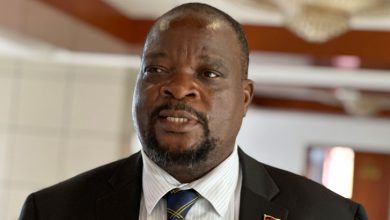
But Minister of Local Government, Unity and Culture Richard Chimwendo Banda, in an interview yesterday, faulted the assessment, claiming that councils were getting more than what they budgeted for.
He said: “For the first time, we have given K47 billion to councils, but councils are failing to implement that. They have more money, but they are failing to utilise.
“With this government, more resources have trickled down. We have government resources, then resources from partners and actually we are punishing councils for failing to utilise
resources. There is no issue to do with resources, but capacity. ”
On the other hand, Malga executive director Hadrod Mkandawire said while they appreciate full funding towards Constituency Development Fund, among others, failure to provide full funding for city roads and other issues remained a worrisome development.
“It is also not true that local authorities are failing to utilise funding, much as we accept capacity gaps, but there is no evidence that local authorities are failing to utilise the funding being provided,” he said.
Earlier, Malga president Esther Sagawa lamented that the shortfalls were severely undermining essential services such as health.
In April this year, a Malga report for the fourth quarter of the 2024/25 financial year titled ‘The long wait for meaningful fiscal devolution continues’ showed that the funding gap stood at K15 billion as LGAs were expected to receive K141 billion but ad only K126 billion disbursed.
Funding to councils remain a bone of contention between local authorities and the central government which they accuse of lack of political will to fully empower councils financially in line with the decentralisation policy.
Ma lawi has 35 local government councils comprising four city councils of Blantyre, Lilongwe, Zomba and Mzuzu, two municipal councils, namely Luchenza in Thyolo and Kasungu, one town council in Mangochi and 28 district councils.